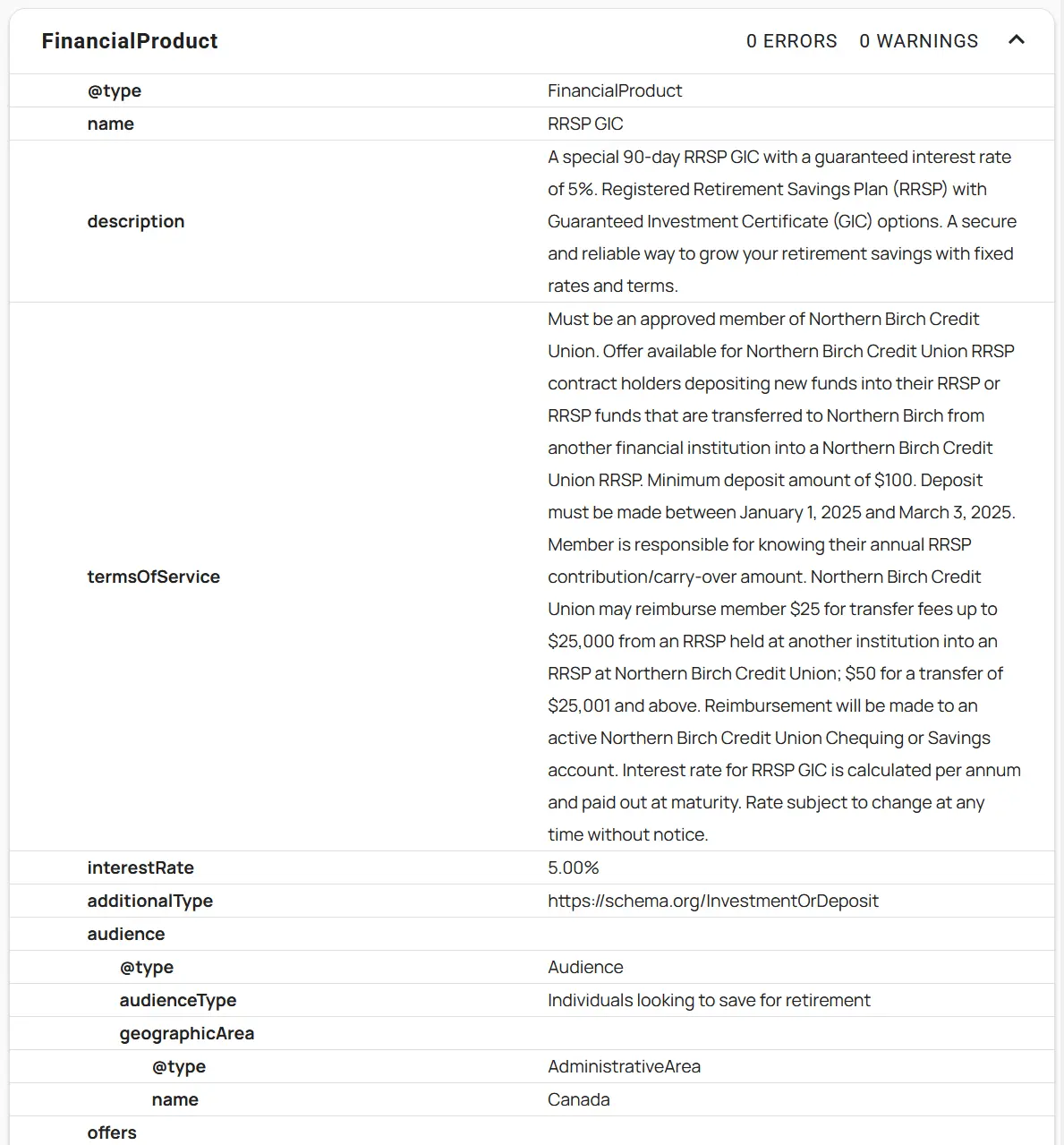
Entity-based schema implementation for AI search visibility
I implemented JSON-LD schema across multiple client websites to improve search visibility in AI Overviews and AI-driven search platforms. The work focused on clearly defining entities, their attributes, and relationships so page content could be better understood by crawlers.
Process
Structured data was a new concept for me at the time so I started by researching schema, entities, and knowledge graphs.
- Reviewed official documentation and best-practice guides
- Researched schema implementations across other sites
- Developed a repeatable heuristic for myself for writing schema
- Implemented schema using:
- Inline
<script type="application/ld+json">blocks - Google Tag Manager where appropriate
Languages
- JSON (JSON-LD)
- JavaScript
Tools
- Google Schema Markup Testing Tool
- Schema.org documentation and validator
- Google Tag Manager
Challenges
Understanding how entities are represented and connected within a knowledge graph; modeling relationships between multiple entities on a single page; identifying best practices for different page types, including:
- Landing pages
- Blog articles
- Financial product pages for a financial institution
Solutions
Used @id fields to create stable, reusable entity references across pages; structured schema
as a data graph instead of isolated objects; refined my heuristic to begin every implementation by:
- Identifying core entities on the page
- Creating a simple page outline, listing entities
- Defining attributes and relationships in the outline
- Translating the simple outline in properly written JSON structured data